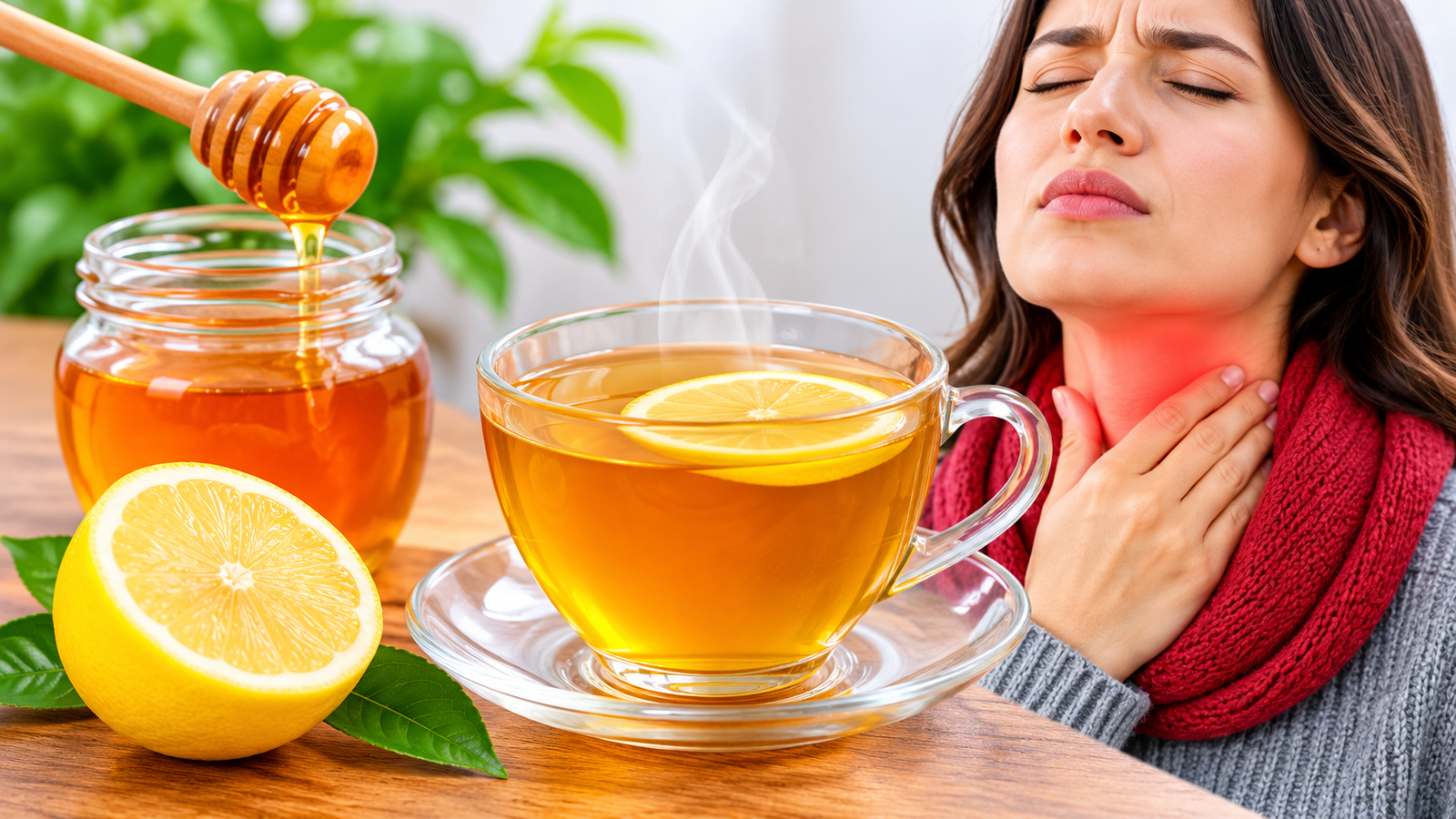
Sore throat home remedies can ease the scratchy, painful feeling that makes every swallow uncomfortable. The good news is that most sore throats get better within a week, and simple steps at home can help you feel much better in the meantime. This guide shares 10 safe and quick ways to get relief, explains what causes a sore throat, and tells you which warning signs mean you should see a doctor.
Please note: This article is general information, not personal medical advice. Babies, young children, pregnant women and people with long-term conditions should check with a doctor or pharmacist before using remedies or medicines. Read our Medical Disclaimer.
What Causes a Sore Throat?
Viral Infections
Colds and flu cause most sore throats. Antibiotics do not help them.
Bacterial Infection
Strep throat and bacterial tonsillitis are less common and may need antibiotics.
Dry Air, Smoke and Dust
Dry, polluted or smoky air can irritate the throat lining.
Allergies and Reflux
Post-nasal drip or stomach acid coming up can cause a sore throat, especially in the morning.
Shouting, talking for long periods and breathing through the mouth when your nose is blocked can also irritate the throat.
Do Sore Throat Home Remedies Really Work?
Sore throat home remedies cannot kill a virus, but they can reduce pain, keep the throat moist and help you rest while your body fights the infection. Evidence is strongest for simple comfort measures such as fluids, rest, warm drinks, honey (for people over one year old) and gargling, and the remedies below are all low-risk when used as described.
10 Sore Throat Home Remedies for Quick Relief
1. Gargle with Warm Salt Water
Stir half a teaspoon of salt into a glass of warm water. Gargle for a few seconds, spit it out and repeat a few times a day. It can ease pain and swelling. This is suitable only for older children and adults who can gargle without swallowing the water.
2. Drink Plenty of Fluids
Fluids keep the throat moist and prevent dehydration, especially if you have a fever. Water, clear soups, diluted juice and milk all help. See our guide on how much water to drink daily.
3. Sip Warm Drinks
Warm water, weak tea, or a warm drink with lemon and honey can soothe the throat. Make sure drinks are warm, not very hot, because very hot liquids can irritate it further.
4. Take Honey
A spoonful of honey, alone or in a warm drink, coats the throat and may ease a cough that comes with a sore throat.
Safety tip: Never give honey to babies under 12 months old, because of the risk of infant botulism.
5. Suck on Lozenges or Hard Sweets
Sucking increases saliva, which keeps the throat moist. Throat lozenges can give short-term relief. Do not give lozenges or hard sweets to young children because of the choking risk, and check the label for age limits.
6. Rest Your Voice and Your Body
Talk less, avoid shouting and avoid whispering, which strains the voice even more. Get plenty of sleep, because rest helps your body fight the infection.
7. Add Moisture to the Air
Dry air makes a sore throat worse, especially at night. A cool-mist humidifier, or sitting in a steamy bathroom after a hot shower, can help. Clean a humidifier every day.
Safety tip: Do not breathe steam over a bowl of boiling water, as scalds are common, especially in children.
8. Eat Soft, Soothing Foods
Soups, khichdi, yoghurt, mashed banana, porridge and ice cream are easy to swallow. Avoid rough, crunchy, spicy or very acidic foods while your throat hurts.
9. Use Pain Relief if Needed
Over-the-counter pain relievers, such as paracetamol or ibuprofen, can ease pain and fever. Follow the label or your pharmacist’s advice, and do not take more than one medicine with the same ingredient. Check with a doctor or pharmacist first if you have asthma, stomach ulcers, kidney, liver or heart problems, or are pregnant. Do not give aspirin to children or teenagers.
10. Avoid Smoke and Other Irritants
Cigarette smoke, strong perfumes, incense, dust and polluted air all make a sore throat worse. If you smoke, avoid smoking while you are unwell, and keep smoke away from children.
Viral or Bacterial? How to Tell the Difference
You cannot always tell by looking at the throat, so a doctor may need to examine you or do a quick test. These clues can help:
| Feature | Usually Viral (Cold or Flu) | Possible Strep Throat (Bacterial) |
|---|---|---|
| Other symptoms | Cough, runny nose, sneezing, hoarse voice | Usually no cough or runny nose |
| Start | Gradual | Often sudden and severe |
| Fever | Mild or none | Often higher |
| Throat | Red and scratchy | Red, swollen tonsils, sometimes white patches |
| Neck glands | May be mildly tender | Often swollen and tender |
| Treatment | Rest, fluids, comfort measures | A doctor may prescribe antibiotics |
Do not take antibiotics on your own, or leftover ones. They do not work on viruses and should be used only when a doctor prescribes them. For general cold and flu symptoms, see our guide to home remedies for cold and flu.
What to Avoid When Using Sore Throat Home Remedies
- Antibiotics without a prescription
- Aspirin for children and teenagers, which can cause a rare but serious illness called Reye’s syndrome
- Very hot drinks and hot, spicy or sharp-textured foods
- Smoking and alcohol, which dry and irritate the throat
- Gargling with strong disinfectant or other chemical solutions
- Unproven “miracle” remedies, especially ones that you swallow in large amounts
How to Prevent a Sore Throat
- Wash your hands often with soap and water for at least 20 seconds.
- Avoid sharing cups, bottles, towels and utensils with someone who is unwell.
- Cover coughs and sneezes with a tissue or your elbow.
- Avoid smoke and polluted air where you can.
- Support your health with enough sleep, regular activity and a balanced diet. See our guide on how to boost immunity naturally.
When to See a Doctor
Get urgent medical help if you or your child has difficulty breathing, noisy breathing, drooling or trouble swallowing saliva, a muffled voice, difficulty opening the mouth, or a stiff neck.
If sore throat home remedies do not help within a week, or if any of the following apply, please see a doctor:
- The sore throat keeps getting worse
- You have a high fever, white patches on the tonsils or very swollen neck glands
- You have a rash, or an earache that does not settle
- You have repeated sore throats, or a hoarse voice that lasts more than 3 weeks
- You have blood in your saliva or phlegm
- You have a weak immune system or a long-term condition
- A child has a sore throat with fever and severe pain, because untreated strep infection can rarely cause complications
Frequently Asked Questions
How long does a sore throat last?
Most sore throats caused by a cold or flu improve within about a week. If it lasts longer or gets worse, see a doctor.
Which sore throat home remedies work fastest?
Warm fluids, salt water gargles, honey (over one year old) and lozenges for older children and adults often give the quickest comfort, though none of them cures the infection.
Are sore throat home remedies safe for children?
Some are, such as fluids, rest and moist air, but others are not suitable. Gargling needs an older child, lozenges can cause choking in young children, and honey must never be given to babies under 12 months. Ask a doctor or pharmacist if you are unsure.
Is a sore throat contagious?
If it is caused by a virus or by strep bacteria, yes, it can spread through coughs, sneezes and shared items. Wash your hands, and stay home while you have a fever.
Do I need antibiotics for a sore throat?
Usually not, because most sore throats are viral. Antibiotics are only needed for certain bacterial infections, and a doctor will decide.
Conclusion
Most sore throats clear up on their own, and sore throat home remedies such as warm fluids, salt water gargles, honey for those over one year old, rest and moist air can make you more comfortable while you heal. Avoid unnecessary antibiotics, watch for warning signs, and see a doctor if the pain is severe, lasts more than a week or comes with trouble breathing or swallowing. For more everyday remedies and safety tips, visit our Home Remedies section.
Trusted sources for further reading
Last updated: October 2026. This article has not been medically reviewed.