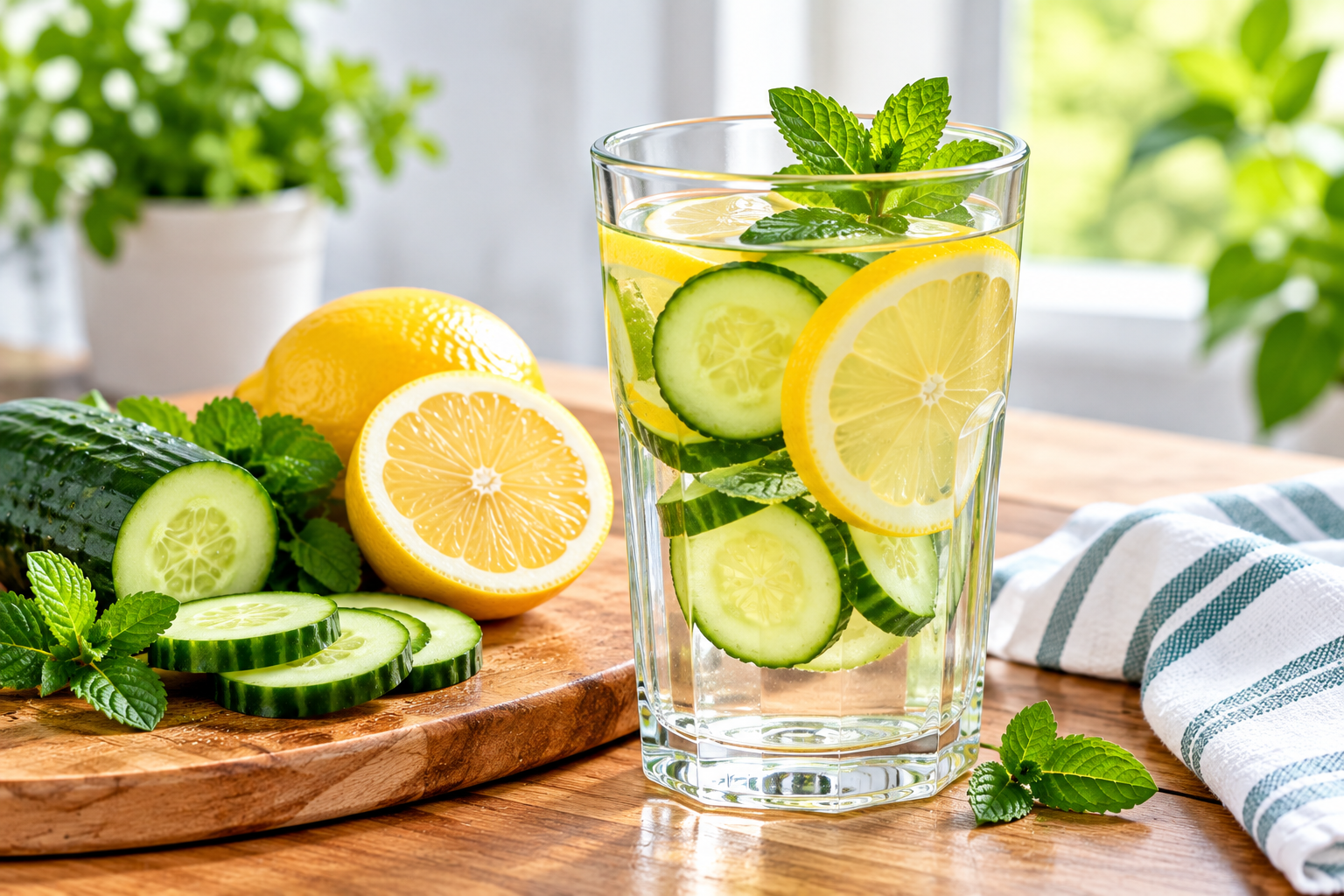
“Drink eight glasses of water a day” is probably the most repeated health advice in the world. But is it correct for everyone? The honest answer is that there is no single number that fits every person. How much you need depends on your body size, the weather, how active you are, your health and what you eat. This guide explains how to know if you are drinking enough, what counts towards your fluids, and how to drink more without struggling.
Please note: This article is general information for healthy people, not personal medical advice. If you have kidney, heart or liver disease, or your doctor has told you to limit fluids, follow your doctor’s advice instead. Read our Medical Disclaimer.
Why Your Body Needs Water
Temperature
Water helps your body cool down through sweat.
Circulation
Blood is mostly water, and it carries oxygen and nutrients around the body.
Digestion and Waste
Water supports digestion and helps the kidneys remove waste, and it can help prevent constipation.
Joints and Brain
It cushions joints and helps you think clearly and stay alert.
So, How Much Water Do You Need?
Health bodies give slightly different guidance, which shows that it is a range, not a fixed rule:
- The UK’s NHS suggests about 6 to 8 glasses (roughly 1.2 litres) of fluid a day for most adults, and more in hot weather or when exercising.
- The US National Academies suggest total water intake of about 2.7 litres a day for women and about 3.7 litres for men. This figure includes water from all drinks and food, and food usually provides around 20 percent of it.
For most healthy adults, a practical goal is to drink about 1.5 to 2 litres (6 to 8 glasses) of fluids a day, then drink more if the weather is hot, if you are sweating or if your urine is dark. Let thirst and urine colour guide you.
Easy Check: The Urine Colour Chart
| Urine Colour | What It Usually Means |
|---|---|
| Pale yellow or straw colour | You are well hydrated |
| Dark yellow | You need more fluids |
| Amber or brown | Possible dehydration. Drink fluids, and see a doctor if it continues |
| Completely clear all day | You may be drinking more than you need |
Some vitamins, foods and medicines can change urine colour, and red or brown urine that is not from food can be a sign of a health problem, so speak to a doctor if you are worried.
When You May Need More Water
| Situation | Why You Need More |
|---|---|
| Hot and humid weather, especially summer | You lose more fluid through sweat |
| Exercise or heavy physical work | Sweating increases fluid loss |
| Fever, vomiting or diarrhoea | The body loses fluids and salts quickly |
| Pregnancy and breastfeeding | The body needs extra fluid. Ask your doctor how much |
| High altitude and dry air | You lose more water when breathing |
| High-fibre diet | Fibre needs water to work well |
If you are pregnant, see also our guide to a healthy diet during pregnancy.
What Counts as Fluid?
- Water is the best choice, because it has no calories or sugar.
- Milk, plain lassi, buttermilk (chaas) and soups count towards your fluids.
- Tea and coffee also count, in sensible amounts. Caffeine in moderate amounts does not dry you out in most people.
- Fruit and vegetables such as watermelon, cucumber, oranges and tomatoes contain a lot of water.
- Sugary drinks, soft drinks, packaged juice and energy drinks do hydrate, but the sugar adds many calories. Limit them.
Signs You Are Not Drinking Enough
- Feeling thirsty and having a dry mouth
- Dark yellow urine, or passing urine less often than usual
- Headache or feeling dizzy
- Tiredness and trouble concentrating
- Constipation
- Dry lips and skin
These signs can have other causes too, so they do not prove dehydration, but drinking fluids and noticing whether they improve is a sensible first step.
Practical Tips to Drink More Water
- Start the day with a glass of water before tea or coffee.
- Keep a bottle with you at work, school or while travelling, and refill it regularly.
- Drink a glass with every meal and one between meals.
- Add flavour naturally with a slice of lemon, cucumber or mint instead of sugary squash.
- Eat water-rich foods like cucumber, watermelon, oranges and soup.
- Set reminders on your phone if you often forget.
- Drink before you are very thirsty, especially in summer.
Hot Weather and Hydration Tips
- Carry water when you go out, and avoid staying in direct sun in the middle of the day.
- Choose lassi, nimbu pani (with limited sugar), coconut water or oral rehydration solution if you have been sweating a lot.
- Wear light, loose clothing and rest in the shade.
- Check on elderly relatives and young children, who can dehydrate quickly.
Can You Drink Too Much Water?
It is rare, but yes. Drinking very large amounts in a short time can lower the sodium level in your blood, a dangerous condition called hyponatraemia. This is a risk mainly for endurance athletes and people with certain medical conditions. Healthy people who drink to thirst are very unlikely to have this problem. Do not force large amounts of water, and never use water as a “detox” or to replace food.
Water and Weight Loss
Water has no calories, so replacing sugary drinks with water can reduce your calorie intake, and a drink before meals may help some people feel full. But water is not a magic fat burner. See our weight loss diet plan for beginners for a balanced approach.
Children, Older Adults and Special Cases
- Children need less than adults, but they can dehydrate faster, especially with fever, vomiting or diarrhoea. Offer fluids regularly through the day.
- Babies under 6 months usually get all the fluid they need from breast milk or formula. Do not give extra water unless a doctor advises it.
- Older adults may not feel thirsty even when they need fluids, so offer drinks regularly.
- People with kidney, heart or liver disease may need to limit fluids. Follow your doctor’s instructions.
When to See a Doctor
Get urgent medical help if you or someone else has very dark or no urine, a very dry mouth, a rapid heartbeat, confusion, extreme weakness, fainting, sunken eyes, or if a baby or child is very drowsy, has no tears or has had no wet nappy for many hours. Severe dehydration needs medical treatment.
Also speak to a doctor if:
- You are extremely thirsty all the time or passing a lot of urine, which can be a sign of diabetes
- Vomiting or diarrhoea lasts more than a day, or you cannot keep fluids down
- You have swelling in your legs or face, or a medical condition that affects how much you should drink
If you or your child has diarrhoea, a pharmacist can advise on oral rehydration salts (ORS), and the packet explains how to mix them safely.
Frequently Asked Questions
Is 8 glasses of water a day necessary?
It is a useful rule of thumb, not a rule that applies to everyone. Some people need less and some need more. Drinking when you are thirsty and checking that your urine is pale yellow is a good guide.
Does tea or coffee count as water?
Yes, they contribute to your daily fluids. Moderate caffeine does not cancel out their water content, but water remains the healthiest choice.
Should I drink water first thing in the morning?
It is a nice habit that helps you rehydrate after sleeping, but there is no proof that it has special health powers. Drink whenever suits you.
Is cold or warm water better?
Both hydrate you equally. Choose what you enjoy and will drink more of.
How much water should I drink while exercising?
Drink before, during and after exercise, in small sips, and more if it is hot. Your thirst and urine colour are good guides.
Conclusion
There is no single perfect amount of water for everyone. For most healthy adults, about 6 to 8 glasses of fluid a day is a sensible start, more in hot weather or when you are active. Watch your thirst and urine colour, choose water over sugary drinks, and eat plenty of fruit and vegetables. If you have a medical condition, follow your doctor’s advice. For more healthy eating ideas, visit our Nutrition & Dietetics section.
Trusted sources for further reading
Last updated: October 2026. This article has not been medically reviewed.