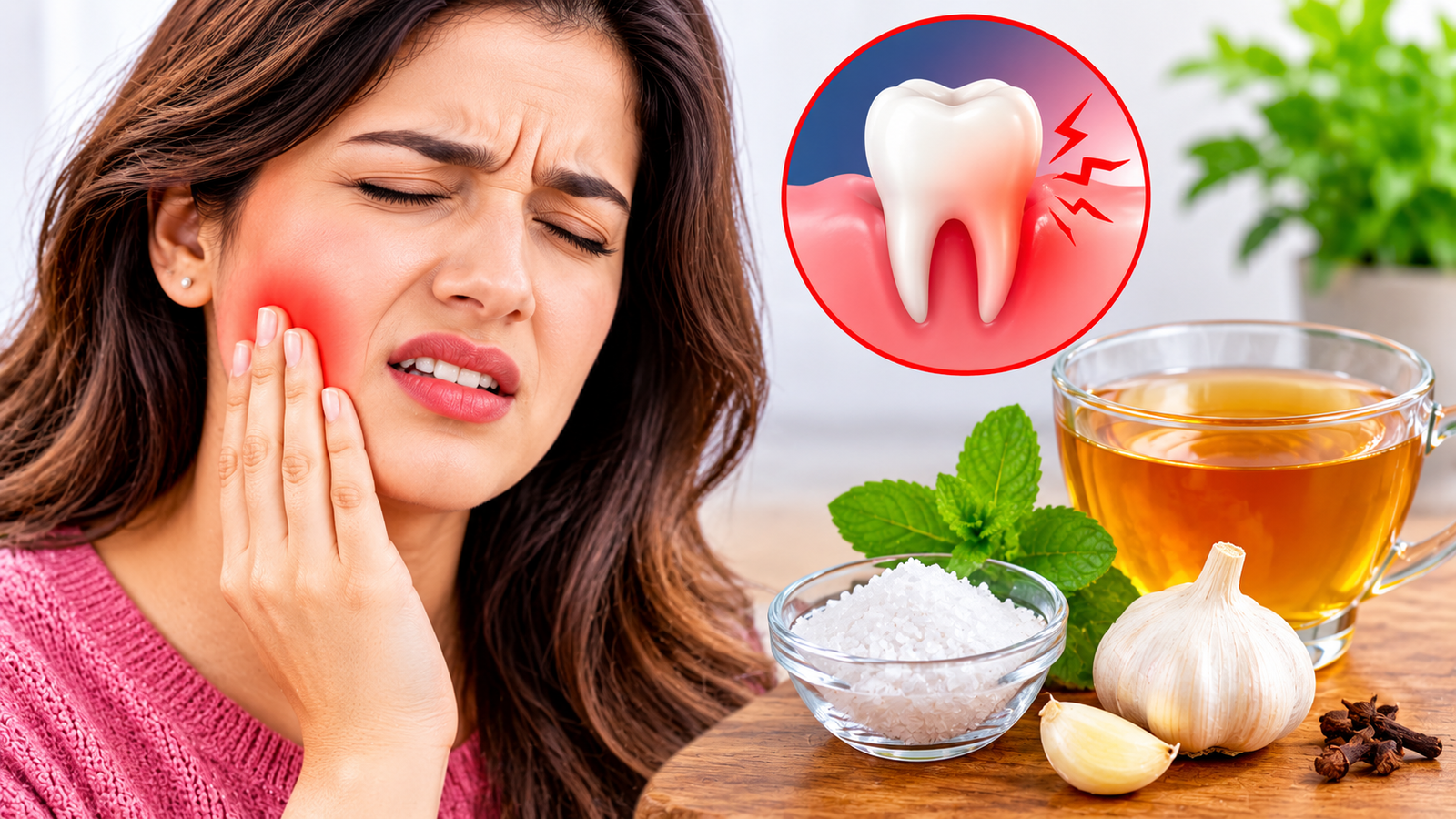
Toothache home remedies can take the edge off a throbbing tooth, especially at night when you cannot get to a dentist. But it is important to know that home care only eases the pain for a short time. A toothache is a sign that something is wrong with the tooth or gum, such as decay or infection, and that usually needs a dentist. This guide shares 8 safe ways to ease tooth pain at home, explains what causes it, and tells you which warning signs mean you should get help quickly.
Please note: This article is general information, not personal medical or dental advice. Home remedies cannot cure the cause of a toothache. Please see a dentist, especially for children and pregnant women. Read our Medical Disclaimer.
What Causes a Toothache?
Tooth Decay (Cavity)
The most common cause. Decay reaches the inner part of the tooth and irritates the nerve.
Gum Disease
Infected or swollen gums can cause pain around the tooth.
Cracked or Broken Tooth
Pain when biting or with hot and cold food.
Abscess
A pocket of pus from infection. This needs urgent dental care.
Other causes include a wisdom tooth coming through, food stuck between teeth, grinding or clenching teeth (often linked to stress, see our guide on how to reduce stress), and sinus infections, which can cause pain in the upper back teeth (see home remedies for cold and flu).
8 Toothache Home Remedies
Use these toothache home remedies for temporary relief only.
1. Rinse with Warm Salt Water
Stir half a teaspoon of salt into a glass of warm water. Swish it gently around your mouth for 30 seconds and spit it out. It can loosen trapped food, ease swelling and clean the area. Repeat a few times a day.
2. Use a Cold Compress
Wrap a few ice cubes or a cold pack in a thin cloth and hold it against your cheek over the sore tooth for 15 to 20 minutes. Cold narrows the blood vessels and can reduce swelling and pain. Never put ice directly on the skin or the tooth.
3. Clean Between the Teeth Gently
A piece of food trapped between the teeth is a common cause of sudden pain. Floss carefully, brush gently with a soft brush and fluoride toothpaste, and rinse your mouth. Do not poke the area with sharp objects.
4. Take a Pain Reliever as Directed
Over-the-counter pain relievers such as paracetamol or ibuprofen can ease dental pain. Follow the instructions on the label or your pharmacist’s advice, and do not take more than one product with the same ingredient. Check first if you have asthma, stomach ulcers, kidney, liver or heart problems, or are pregnant. Do not give aspirin to children or teenagers. Never place a crushed painkiller tablet on the gum, as it can burn the tissue.
5. Try Clove Oil Carefully
Clove contains eugenol, which can temporarily numb pain, and dentists sometimes use it. Dilute one or two drops of clove oil in a teaspoon of a carrier oil such as olive oil, dab a small amount on the tooth with a cotton bud, and avoid the gum and tongue. Undiluted clove oil can burn the gums. Do not use it on young children, and stop if it irritates.
6. Eat Garlic as Part of Food, Do Not Rely on It
Garlic contains natural compounds that fight germs in laboratory studies, but there is little proof that it treats a toothache. Eating garlic with food is safe for most people. Do not hold raw garlic against the gum for a long time, because it can burn the soft tissue. Garlic will not cure decay or an infection.
7. Keep Your Head Raised
Lying flat can increase blood flow to the head and make throbbing pain worse. Use an extra pillow to keep your head higher while you sleep.
8. Choose Gentle Food and Drink
Avoid very hot, very cold, sugary, sticky and hard foods, which can make the pain worse. Choose soft, lukewarm foods such as khichdi, yoghurt, soup and mashed vegetables, and chew on the other side of your mouth.
Quick Summary of Toothache Home Remedies
| Remedy | Helps With | Caution |
|---|---|---|
| Warm salt water rinse | Swelling and cleaning | Do not swallow |
| Cold compress | Swelling and pain | Wrap ice in cloth |
| Gentle brushing and flossing | Trapped food | Be gentle |
| Pain reliever | Short-term pain | Follow the label; check if unsure |
| Diluted clove oil | Temporary numbing | Can burn gums; not for young children |
| Garlic in food | Not proven for toothache | Do not leave on the gum |
What to Avoid
- Putting aspirin or other tablets on the gum. It causes chemical burns.
- Using undiluted essential oils, alcohol or strong chemicals in the mouth.
- Squeezing or pricking a swelling or abscess. It can spread infection.
- Using a heat pack on the cheek if you think you have an infection, because heat can make the swelling worse.
- Tobacco, betel quid (paan), gutka, supari and naswar. They damage teeth and gums and raise the risk of mouth cancer.
- Delaying the dentist because the pain went away. A nerve that has died can stop hurting while the infection continues.
- Taking leftover antibiotics. Use them only if a dentist or doctor prescribes them.
When to See a Dentist or Doctor
Get urgent medical help immediately if you have swelling of the face, jaw or neck, difficulty swallowing or breathing, swelling that spreads towards the eye, a high fever, or pain after a blow to the face or jaw. These can be signs of a serious infection or injury.
Please see a dentist as soon as you can if:
- The toothache lasts more than a day or two
- You have pain when biting or chewing, or when eating hot or cold things that lingers
- You notice a bad taste, pus or a pimple-like bump on the gum
- You have a broken, loose or knocked-out tooth
- You have bleeding, swollen or receding gums
- A child or a pregnant woman has a toothache
A dentist may clean out decay and fill the tooth, treat gum infection, give antibiotics where needed, do a root canal or remove a tooth that cannot be saved.
How to Prevent Toothache
- Brush twice a day for two minutes with fluoride toothpaste.
- Clean between your teeth once a day with floss or interdental brushes.
- Cut down on sugary drinks, sweets and sticky snacks, especially between meals.
- Avoid tobacco, paan, gutka and naswar.
- See a dentist every 6 to 12 months, even when nothing hurts.
Frequently Asked Questions
What is the fastest of the toothache home remedies?
A cold compress, a warm salt water rinse and a correctly dosed pain reliever usually give the quickest comfort. None of them treats the cause, so book a dentist visit.
Does garlic cure a toothache?
No. Garlic has natural germ-fighting compounds, but there is little proof that it cures toothache. Eating it in food is fine, but raw garlic held against the gum can burn it.
Are toothache home remedies safe for children?
Some are, such as a cold compress and gentle cleaning, but clove oil and many medicines are not suitable for young children. Take a child with a toothache to a dentist.
Can a toothache go away on its own?
Pain from minor irritation may settle, but pain from decay or infection usually returns or gets worse, and the problem keeps growing even if the pain stops.
Can I use toothache home remedies in pregnancy?
A salt water rinse, a cold compress and gentle cleaning are generally fine. Check with your doctor or dentist before taking any medicine or using oils.
Conclusion
Toothache home remedies such as warm salt water rinses, a cold compress, careful cleaning and a correctly used pain reliever can make you more comfortable, but they only buy you time. Garlic and clove oil are popular, yet neither cures a toothache, and both can irritate the gums if used wrongly. Book a dentist appointment, and go urgently if you have swelling, fever or trouble breathing or swallowing. For more safe, everyday remedies, visit our Home Remedies section.
Trusted sources for further reading
Last updated: October 2026. This article has not been medically reviewed.