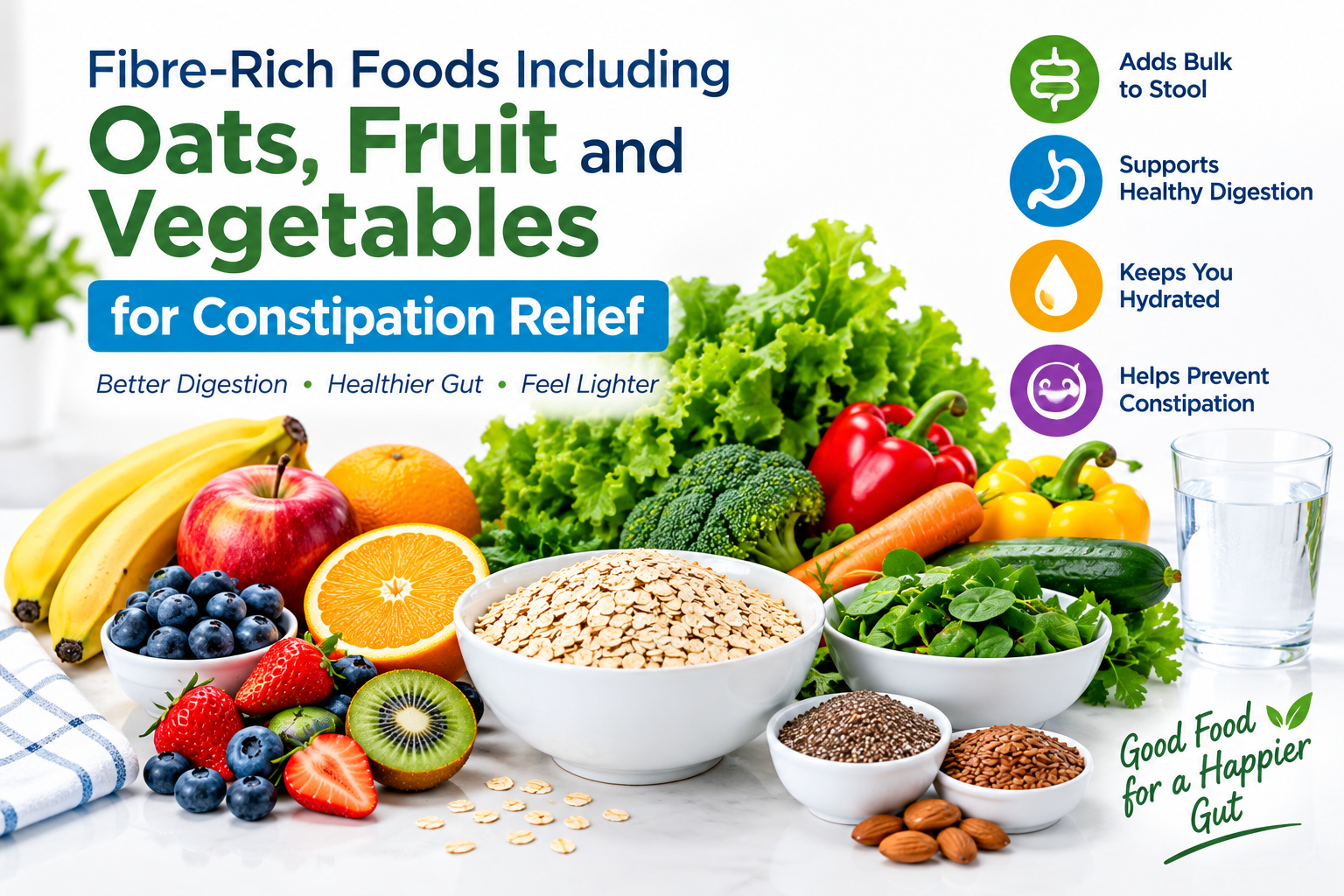
Constipation is one of the most common digestive problems, and almost everyone has it at some time. It can make you feel bloated, uncomfortable and tired of straining on the toilet. The good news is that for most people, simple changes in food, fluids, daily habits and toilet routine bring lasting relief. This guide explains what constipation is, what causes it, how to treat it at home, and when it needs a doctor.
Please note: This article is general information, not personal medical advice. Please speak to a doctor before giving laxatives to children, or using them during pregnancy or for a long time. Read our Medical Disclaimer.
What Is Constipation?
Constipation means that you pass stools less often than usual, or that stools are hard, dry and difficult to pass. Bowel habits differ from person to person, so what matters is a change from your normal pattern. Doctors often consider it constipation when you have:
- Fewer than 3 bowel movements a week
- Hard, dry or lumpy stools
- Straining or pain when passing stools
- A feeling that you have not emptied your bowel fully
- A bloated or heavy feeling in the stomach
Common Causes
Low-Fibre Diet
Too much white bread, rice, meat, cheese and fried food, with too few fruit, vegetables and pulses.
Not Enough Fluids
Dry, hard stools are more likely when you drink too little.
Little Activity
Sitting for long hours slows the gut down.
Ignoring the Urge
Holding in stools again and again makes constipation worse.
Other causes include:
- Medicines, such as some painkillers, iron supplements, calcium or aluminium antacids and some antidepressants
- Pregnancy, because of hormone changes and pressure on the bowel
- Travel and changes in routine
- Stress and anxiety
- Medical conditions, such as an underactive thyroid, diabetes and irritable bowel syndrome (IBS)
- Older age, because the gut often works more slowly
Home Remedies and Lasting Relief
1. Eat More Fibre, Gradually
Adults generally need around 25 to 30 grams of fibre a day, but many people eat much less. Add fibre slowly over a couple of weeks and drink more water at the same time. If you increase fibre too fast, you may get gas and bloating. Fibre-rich foods include:
| Food Group | Examples |
|---|---|
| Whole grains | Whole wheat roti, oats, daliya, brown rice, barley |
| Pulses | Daal, chickpeas, rajma, lobia |
| Fruit | Guava, pear, apple with skin, orange, prunes, dried figs (anjeer) |
| Vegetables | Spinach, carrot, peas, cabbage, okra, salad |
| Seeds and nuts | Flaxseed, chia seeds, a small handful of nuts |
2. Drink Enough Fluids
Water helps fibre work. Drink regularly through the day, and aim for pale yellow urine. See our guide on how much water to drink daily.
3. Move Every Day
Walking, even for 20 to 30 minutes, helps the bowel move. Our guide to home workouts without equipment has gentle ideas to start with.
4. Build a Toilet Routine
Try to go at the same time each day, often 15 to 30 minutes after breakfast, when the bowel is most active. Do not rush, and do not ignore the urge when you feel it.
5. Sit in a Better Position
Resting your feet on a small stool so your knees are above your hips, and leaning forward slightly, can make passing stools easier. Do not strain for long periods, as it can cause piles (haemorrhoids) and small tears.
6. Try Prunes or Soaked Figs
Prunes (dried plums) and soaked dried figs are traditional and have some evidence for helping constipation. Start with a small portion and see how your body responds.
7. Consider Psyllium Husk (Isabgol)
Psyllium husk is a fibre supplement that softens and bulks stools. Mix it with a full glass of water, drink it straight away and follow the packet instructions. Taking it without enough water can make constipation worse or cause a blockage. Ask a pharmacist before using it if you take regular medicines, as it can affect how some are absorbed.
8. Manage Stress
Stress can upset your digestion. Gentle exercise, slow breathing and enough sleep help. See our guide on how to reduce stress.
What About Laxatives?
If lifestyle changes are not enough, a pharmacist or doctor may suggest a laxative for a short time. There are different types, and they work in different ways:
| Type | How It Works | Points to Remember |
|---|---|---|
| Bulk-forming (such as psyllium) | Adds fibre and bulk | Needs plenty of water |
| Osmotic (such as lactulose or macrogol) | Draws water into the bowel to soften stools | May cause gas and bloating |
| Stimulant (such as senna or bisacodyl) | Makes the bowel muscles contract | For short-term use only; can cause cramps |
| Stool softeners | Make stools softer and easier to pass | Ask your pharmacist if suitable |
Do not use laxatives for a long time without medical advice, because the bowel can become dependent on them and constipation can persist. Never give laxatives to children, or use them in pregnancy, without asking a doctor.
Constipation in Special Groups
- Children: constipation is common, often linked to low fibre, little water and withholding stools. Ask a doctor before giving any laxative.
- Pregnancy: increase fibre and fluids first, and check with your doctor before taking any supplement or laxative. See also our healthy diet during pregnancy guide.
- Older adults: a combination of medicines, low activity and low fluids is common, so review medicines with a doctor.
A Simple Daily Plan for Regular Bowels
- Start the morning with a glass of water, then a breakfast with fibre, such as oats with fruit or whole wheat roti with vegetables.
- Visit the toilet about 20 to 30 minutes after breakfast, without rushing.
- Eat fruit and vegetables with lunch and dinner, and include daal or beans most days.
- Walk for 20 to 30 minutes every day.
- Drink water through the day and cut back on sugary and fried snacks.
When to See a Doctor
Get urgent medical help if constipation comes with severe stomach pain, repeated vomiting, a swollen hard belly, or you cannot pass stools or gas at all. These can be signs of a bowel blockage.
Please also see a doctor if:
- There is blood in your stool, or your stools are black
- You are losing weight without trying
- Constipation is new and continues for more than 3 weeks, especially if you are over 50
- It alternates with diarrhoea, or you feel your bowel is never empty
- You have a family history of bowel cancer, or you look pale and feel very tired
- Home remedies are not working, or you rely on laxatives often
- Your child has frequent or painful constipation
Frequently Asked Questions
How many times a day should I pass stools?
Normal ranges from three times a day to three times a week. What matters is your usual pattern and whether stools are soft and easy to pass.
Does drinking more water cure constipation?
Water helps, especially when you increase fibre, but drinking extra water alone may not fix it if your diet is low in fibre or you are inactive.
Is it safe to use laxatives regularly?
Short-term use is usually fine as advised by a pharmacist or doctor. Regular long-term use, especially of stimulant laxatives, should only be under medical guidance.
Can constipation cause piles?
Yes. Straining can cause haemorrhoids (piles) and small tears called anal fissures. Treating constipation helps prevent them.
Why do I get constipated when I travel?
Changes in routine, food, water and activity can slow your bowel. Drink water, eat fibre-rich foods, walk when you can and try to keep your toilet routine.
Conclusion
For most people, constipation improves with more fibre, enough fluids, regular movement and a calm toilet routine. Add fibre gradually, avoid long-term laxative use unless a doctor advises it, and do not ignore warning signs like blood in the stool, weight loss or constipation that does not go away. For more conditions explained in simple language, visit our Conditions & Treatments section.
Trusted sources for further reading
Last updated: October 2026. This article has not been medically reviewed.