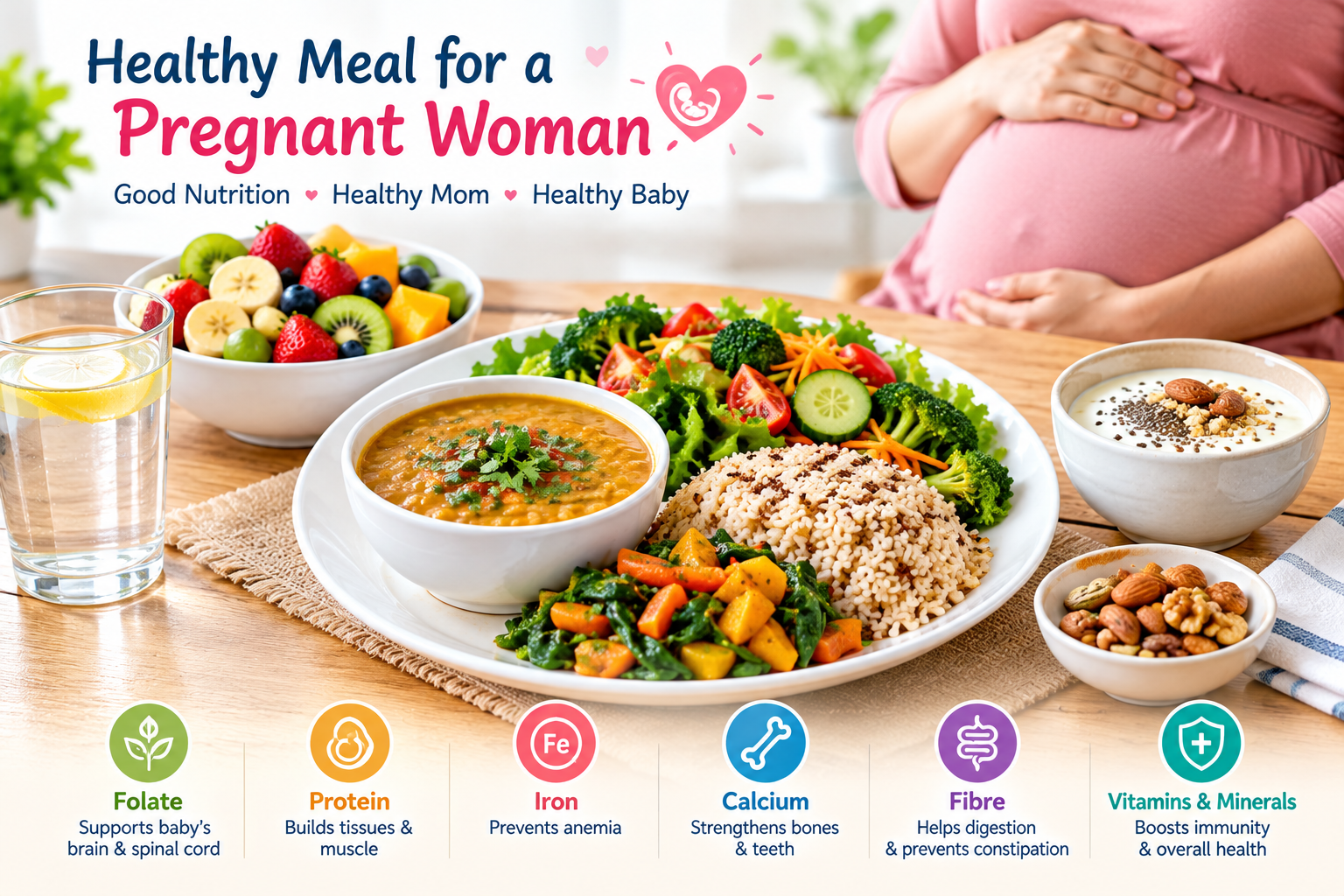
Pregnancy is a time when good food matters more than ever, because what you eat helps your baby grow and keeps you strong and well. But there is also a lot of confusing advice, from “eat for two” to long lists of foods you supposedly must never touch. The truth is simpler: eat a varied, balanced diet, take the supplements your doctor recommends, and avoid a short list of foods that carry real risks. This guide explains the key nutrients, what to eat, what to avoid, how to handle morning sickness and what a day of healthy meals can look like.
Please note: This article is general information, not personal medical advice. Every pregnancy is different. Please follow the advice of your own doctor, midwife or dietitian, especially if you have diabetes, high blood pressure, anaemia, a food allergy or a high-risk pregnancy. Read our Medical Disclaimer.
Do You Really Need to “Eat for Two”?
No. You need more nutrients during pregnancy, but you do not need double the food. Most women need little or no extra food in the first three months, and only a small amount extra in the last six months, about the size of a healthy snack. Focus on the quality of your food rather than eating larger amounts. How much weight is healthy to gain depends on your weight before pregnancy, so your doctor or midwife will guide you.
Key Nutrients During Pregnancy
| Nutrient | Why It Matters | Good Food Sources |
|---|---|---|
| Folate (folic acid) | Helps prevent neural tube defects in the baby’s brain and spine | Green leafy vegetables, lentils, chickpeas, oranges, fortified cereals |
| Iron | Supports your blood and carries oxygen to the baby; deficiency is common | Lentils, beans, spinach, eggs, well-cooked meat, fortified cereals |
| Calcium | Builds the baby’s bones and teeth | Milk, yoghurt, cheese made from pasteurised milk, small fish with soft bones |
| Protein | Supports growth of the baby’s tissues | Eggs, lentils, chickpeas, chicken, fish, dairy, nuts |
| Iodine | Needed for the baby’s brain development | Iodised salt, dairy, fish |
| Vitamin D | Helps the body use calcium and supports bones | Safe sunlight, eggs, oily fish, fortified foods |
| Omega-3 fats | Support the baby’s brain and eyes | Low-mercury oily fish, walnuts, flaxseeds |
Supplements: Ask Your Doctor
Food alone is often not enough for some nutrients. Doctors commonly advise a daily folic acid supplement (usually 400 micrograms) from before conception until about the 12th week of pregnancy, and some women need a higher dose. Many women also need iron or vitamin D, depending on blood tests and sun exposure. Do not guess: take only the supplements and doses your doctor recommends, and do not use extra vitamins or herbal products on your own, because too much of some vitamins (such as vitamin A) can harm the baby.
Foods to Eat More Of
Vegetables and Fruit
Aim for a variety of colours every day. Wash all produce well.
Whole Grains
Whole wheat roti, brown rice, oats and daliya give energy and fibre.
Pulses and Protein
Daal, chickpeas, beans, eggs, chicken and fish, all fully cooked.
Dairy
Pasteurised or properly boiled milk, yoghurt and cheese for calcium.
Foods and Drinks to Avoid or Limit
| Avoid or Limit | Why |
|---|---|
| Raw or undercooked meat, chicken and eggs, including runny eggs | Risk of food poisoning such as salmonella |
| Raw fish and shellfish, such as sushi and raw oysters | Risk of infection |
| Fish high in mercury, such as shark, swordfish and king mackerel | Mercury can affect the baby’s developing nervous system |
| Unpasteurised (raw) milk and soft cheeses made from it | Risk of listeria infection, which can be serious in pregnancy |
| Liver and liver products, and supplements containing vitamin A | Too much vitamin A can harm the baby |
| Alcohol | No safe amount is known; it can harm the baby’s development |
| Too much caffeine | Limit tea, coffee and cola; many guidelines suggest staying under about 200 mg a day, roughly two cups of coffee |
| Raw or unripe papaya | Best avoided; ask your doctor about ripe papaya |
| Herbal teas and remedies without medical advice | Many are not tested for safety in pregnancy |
| Tobacco and smoke | Raises the risk of complications |
Fish is still healthy in pregnancy. Aim for fish that is low in mercury, such as sardines, salmon and trout, and ask your doctor how often to eat it.
Easy Food Safety Rules
- Wash hands, fruit and vegetables thoroughly before eating or cooking.
- Cook meat, chicken, fish and eggs until they are steaming hot and cooked all the way through.
- Keep raw and cooked foods apart and use separate chopping boards.
- Drink only pasteurised or properly boiled milk, and clean, safe water.
- Refrigerate leftovers quickly and reheat them until piping hot. Do not keep cooked food for long.
Tips for Morning Sickness
- Eat small meals often, so your stomach is never completely empty.
- Keep plain biscuits, toast or dry roti by the bed and have a few before you get up.
- Avoid strong smells and very oily or spicy food if they upset you.
- Sip water, lemon water or clear drinks through the day.
- Some women find ginger helps; ask your doctor first, especially if you take other medicines.
Mild nausea is common in early pregnancy. But if you cannot keep food or fluids down, ask your doctor straight away, as severe vomiting needs treatment.
Handling Heartburn, Constipation and Tiredness
- Heartburn: eat smaller meals, avoid lying down straight after eating, and limit fried and spicy food.
- Constipation: eat more fibre from fruit, vegetables and whole grains, drink enough water and stay gently active.
- Tiredness: rest when you can, and ask your doctor to check for anaemia if you feel exhausted or look pale.
Sample Day of Healthy Meals
| Meal | Ideas |
|---|---|
| Breakfast | Fully cooked vegetable omelette, 1 whole wheat roti and a glass of milk |
| Mid-morning snack | An orange, kinnow or a banana |
| Lunch | Daal, 1 or 2 rotis, a cooked green vegetable such as spinach, and salad |
| Afternoon snack | Plain yoghurt with fruit, or roasted chickpeas |
| Dinner | Well-cooked chicken or fish curry (or chickpea curry) with vegetables and rice or roti |
| Before bed | A glass of warm milk |
For more budget-friendly protein ideas, see our guide to affordable high-protein foods.
Water and Staying Hydrated
Drink plenty of fluids through the day, mainly water. Dehydration can cause headaches, tiredness, constipation and, in hot weather, dizziness. If your urine is dark yellow, drink more. Limit sugary drinks and packaged juice.
Gestational Diabetes and High Blood Pressure
Some women develop high blood sugar (gestational diabetes) or high blood pressure during pregnancy. These conditions are checked during your antenatal visits. If you are diagnosed, follow the food plan from your doctor or dietitian instead of this general guide, because the amount and timing of carbohydrates may need to change.
When to See a Doctor
Get urgent medical help immediately if you have vaginal bleeding, severe stomach pain, a severe headache with blurred vision or sudden swelling of the face or hands, fever with chills, fluid leaking from the vagina, or if your baby moves much less than usual.
Speak to your doctor or midwife if:
- You are vomiting repeatedly and cannot keep food or drink down
- You are losing weight, or gaining weight very quickly
- You feel very tired, dizzy or look pale, which can be signs of anaemia
- You have a food allergy, diabetes, thyroid disease or follow a strict vegetarian or vegan diet
- You are not sure which supplements you should take
- You think you may have eaten something unsafe and feel unwell
Frequently Asked Questions
Is it safe to eat fish during pregnancy?
Yes, fish is a healthy food. Choose fish low in mercury, such as sardines, salmon and trout, avoid raw fish and high-mercury fish like shark and swordfish, and cook fish fully.
Can I drink tea and coffee while pregnant?
A small amount is usually fine. Many guidelines suggest limiting caffeine to about 200 mg a day, which is roughly two cups of coffee, and remember that tea, cola and chocolate contain caffeine too.
Are eggs safe in pregnancy?
Fully cooked eggs, with firm white and yolk, are a good source of protein. Avoid raw or runny eggs and foods made with them.
Should I take a vitamin supplement?
Most doctors advise at least folic acid, and often vitamin D and sometimes iron. Ask your doctor which ones you need and at what dose.
Are cravings and aversions normal?
Yes, they are very common. Enjoy cravings in moderation, but if you crave non-food items such as soil, chalk or ice in large amounts, tell your doctor, as this can be linked to anaemia.
Conclusion
A healthy pregnancy diet does not need to be complicated. Eat a wide variety of fresh, home-cooked foods, take the supplements your doctor recommends, drink plenty of water and avoid the few foods that carry real risks. Do not feel guilty about occasional treats or bad days of nausea. Go to your antenatal check-ups and ask questions whenever you are worried. For more guidance on women’s health, visit our Women’s Health section.
Trusted sources for further reading
Last updated: October 2026. This article has not been medically reviewed.