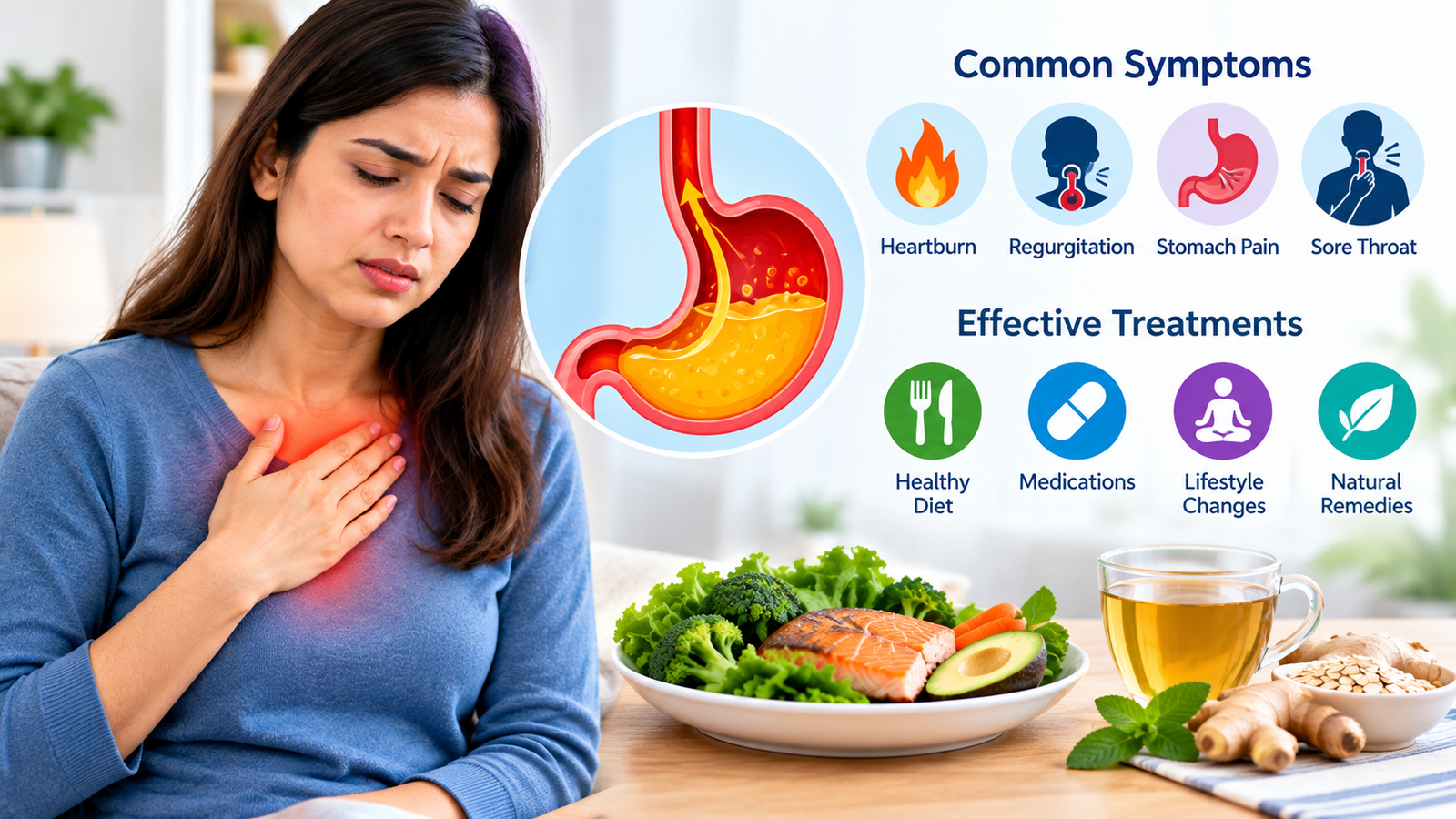
Acid Reflux & GERD
A Comprehensive Guide to Causes, Symptoms, and Management
Introduction
Acid reflux is a condition in which stomach contents flow backward into the esophagus, causing discomfort and potential damage to the esophageal lining. When this backward flow occurs repeatedly and leads to troublesome symptoms or complications, it is diagnosed as gastroesophageal reflux disease (GERD). GERD is one of the most common digestive disorders worldwide, affecting approximately 13% of the global population. It impacts people of all ages, though it is more prevalent in adults over 40. Understanding the difference between occasional acid reflux and chronic GERD is essential for proper management and prevention of long-term complications. This comprehensive guide explores the causes, symptoms, risk factors, diagnostic approaches, and effective treatment strategies for managing acid reflux and GERD.
Understanding the Digestive System and Reflux Mechanism
To understand GERD, it is helpful to understand how the digestive system works. When you swallow food, it travels down the esophagus, a muscular tube connecting the throat to the stomach. At the junction between the esophagus and stomach lies the lower esophageal sphincter (LES), a ring of muscle that acts as a one-way valve. Normally, the LES opens to allow food to pass into the stomach and then closes tightly to prevent stomach contents from flowing back up.
In GERD, this valve relaxes at inappropriate times or does not close properly, allowing stomach acid, bile, and digestive enzymes to flow back into the esophagus. Because the esophagus lacks the protective lining that the stomach has, this reflux causes irritation, inflammation, and the characteristic burning sensation known as heartburn.
Factors Contributing to Sphincter Dysfunction
- Dietary triggers: Fatty foods, caffeine, carbonated beverages, chocolate, mint, alcohol, and spicy foods
- Lifestyle factors: Smoking, being overweight, and eating large meals
- Medical conditions: Hiatal hernia, delayed stomach emptying, and pregnancy
- Medications: Anticholinergics, calcium channel blockers, progesterone, and nitrates
When lying down or bending over, gravity no longer helps keep stomach contents down, which is why symptoms often worsen at night or shortly after meals. Pressure on the abdomen from obesity, tight clothing, or pregnancy can also force stomach contents upward.
Causes and Risk Factors
Primary Causes
The primary cause of GERD is a malfunctioning lower esophageal sphincter. However, several underlying conditions can contribute to this dysfunction:
- Hiatal hernia: When part of the stomach pushes up through the diaphragm into the chest cavity, it can weaken the LES and increase reflux.
- Delayed gastric emptying: When the stomach empties slowly, pressure builds up and promotes reflux.
- Increased abdominal pressure: Obesity, pregnancy, and tight clothing can push stomach contents upward.
- Reduced saliva production: Saliva helps neutralize acid; reduced production worsens reflux.
Risk Factors
Several factors increase the likelihood of developing GERD:
- Obesity: Excess weight increases abdominal pressure and promotes reflux.
- Pregnancy: Hormonal changes and pressure from the growing fetus contribute to reflux.
- Smoking: Tobacco weakens the LES and reduces saliva production.
- Alcohol consumption: Alcohol relaxes the LES and irritates the esophagus.
- Certain foods: Fatty foods, chocolate, mint, caffeine, and spicy foods can trigger symptoms.
- Certain medications: Some drugs relax the LES or irritate the esophagus.
- Age: Risk increases with age due to weakening of the LES.
- Family history: Genetics may play a role in susceptibility to GERD.
Recognizing the Symptoms
Common Symptoms
The hallmark symptom of GERD is heartburn—a burning pain or discomfort behind the breastbone. This may occur after eating, when lying down, or when bending forward. Other common symptoms include:
- Regurgitation: Food or liquid backing up into the throat or mouth, sometimes with a sour or bitter taste
- Chest pain: Often occurs after meals; important to distinguish from cardiac pain
- Throat symptoms: Hoarseness, sore throat, or a sensation of a lump in the throat
- Respiratory symptoms: Chronic cough, wheezing, or asthma-like symptoms if reflux reaches the lungs
- Difficulty swallowing: May indicate complications such as narrowing of the esophagus
Diagnostic Approaches
If symptoms persist or worsen, a healthcare provider may recommend diagnostic tests:
- Endoscopy: A thin, flexible tube with a camera examines the esophagus and stomach.
- Ambulatory pH monitoring: A device measures acid levels in the esophagus over 24 hours.
- Esophageal manometry: Measures muscle function and coordination in the esophagus.
- Barium swallow: X-rays with contrast dye help visualize the esophagus and stomach.
Lifestyle Modifications
Lifestyle changes are the foundation of GERD management and can significantly reduce symptoms. For many people, simple adjustments are enough to control mild to moderate reflux.
Dietary Adjustments
- Eat smaller, more frequent meals instead of three large ones to reduce stomach volume
- Avoid trigger foods that relax the sphincter or stimulate acid production, including fatty foods, chocolate, mint, caffeine, alcohol, and carbonated beverages
- Wait 2 to 3 hours after eating before lying down
- Limit food intake within 4 hours of bedtime
- Chew gum after meals: Chewing gum increases saliva production, which helps neutralize acid
- Stay upright after eating: Sitting or standing allows gravity to help keep stomach contents down
Weight and Smoking
- Lose weight if overweight or obese: Excess weight increases abdominal pressure and promotes reflux
- Quit smoking: Tobacco weakens the lower esophageal sphincter and reduces saliva production, which normally helps neutralize acid
- Avoid tight clothing: Tight belts and waistbands increase abdominal pressure
Sleep Positioning
- Elevate the head of the bed by 6 to 8 inches using blocks under the bed legs, a wedge pillow, or a wedge under the mattress
- Extra pillows alone are not effective because they only elevate the head, not the entire upper body
- Sleep on your left side: Studies suggest that sleeping on the left side reduces reflux compared to the right side
Medication Options
Several classes of medications are available for GERD management, ranging from over-the-counter remedies to prescription treatments. The choice of medication depends on the severity of symptoms and the presence of complications.
Antacids
Antacids provide rapid relief of mild heartburn by neutralizing stomach acid. They are available over the counter but should not be used daily for severe symptoms without medical guidance. Common examples include calcium carbonate, magnesium hydroxide, and aluminum hydroxide.
H2 Blockers
H2 blockers reduce stomach acid production. They can help heal the esophagus but are less effective than proton pump inhibitors. Examples include famotidine (Pepcid) and cimetidine. These are available both over the counter and by prescription. They typically take 30 to 60 minutes to work and last several hours.
Proton Pump Inhibitors (PPIs)
PPIs are the most effective medical treatment for GERD. They reduce stomach acid production and can heal esophageal lining damage in most people. Common PPIs include:
- Omeprazole (20 mg)
- Lansoprazole (30 mg)
- Pantoprazole (40 mg)
- Esomeprazole (40 mg)
- Rabeprazole (20 mg)
Dosing: Typically taken 30 minutes before a meal, often breakfast. For partial response, twice-daily dosing before breakfast and dinner may be prescribed. The dose should be adjusted to the minimum required to control symptoms, and intermittent or as-needed use may be appropriate after initial healing.
Side effects are uncommon and may include headache, diarrhea, and upset stomach. Prolonged use may increase the risk of Clostridioides difficile infection, and experts continue to study long-term effects.
Potassium-Competitive Acid Blockers
Vonoprazan, a newer class of acid suppressants, has shown superiority to PPIs in erosive reflux disease and non-inferiority in milder cases. It works faster and provides longer-lasting acid suppression than traditional PPIs.
Baclofen
Baclofen is a muscle relaxant that can help reduce reflux by strengthening the lower esophageal sphincter. It is sometimes used for patients who do not respond to other treatments.
Surgical and Procedural Options
For patients who do not respond adequately to lifestyle changes and medications, or who wish to avoid long-term medication, surgical options exist.
Fundoplication
Fundoplication is the most common surgery for GERD. The surgeon wraps the top of the stomach around the end of the esophagus to reinforce the lower esophageal sphincter. This is typically performed laparoscopically, resulting in smaller scars and faster recovery. Most patients experience long-term symptom improvement.
Weight-Loss Surgery
For patients with GERD and obesity, bariatric surgery—most often gastric bypass—can reduce both weight and GERD symptoms. This option is particularly beneficial for individuals with a body mass index (BMI) over 35 who have not achieved adequate results with other treatments.
Endoscopic Procedures
In select cases, endoscopic techniques may be used to tighten the sphincter or deliver radiofrequency energy to it. These procedures are less common than surgery but offer less invasive alternatives for certain patients.
Linx Device
The Linx device is a ring of magnetic beads placed around the lower esophageal sphincter. It helps keep the sphincter closed to prevent reflux while allowing food to pass through. This is a newer option for selected patients.
Complications of Untreated GERD
Prolonged exposure of the esophagus to refluxed acid can lead to serious complications:
- Esophagitis: Inflammation of the esophagus, potentially causing pain with swallowing
- Esophageal ulcers: Open sores that can bleed and cause pain
- Esophageal stricture: Narrowing that makes swallowing solid foods increasingly difficult
- Barrett esophagus: Precancerous changes in the cells lining the esophagus
- Respiratory problems: Chronic cough, asthma, pneumonia, and laryngitis
- Tooth decay: Stomach acid wears away tooth enamel
- Sleep disruption: Nighttime reflux can interfere with sleep quality
When to Seek Medical Care
Consult a healthcare provider if symptoms do not improve after 2 weeks of home treatment, if symptoms worsen or interfere with daily activities, or if new symptoms develop. Diagnostic evaluation may include endoscopy, pH testing, or esophageal manometry, particularly for patients who do not respond to empirical treatment or who have warning signs of complications.
Prevention Strategies
Preventing GERD involves adopting healthy habits that reduce the likelihood of reflux:
- Maintain a healthy weight
- Eat a balanced diet rich in fruits, vegetables, and whole grains
- Avoid trigger foods and beverages
- Eat smaller meals more frequently
- Avoid lying down within 3 hours of eating
- Elevate the head of the bed
- Quit smoking and limit alcohol
- Manage stress through relaxation techniques
- Wear loose-fitting clothing
Living Well with GERD
Managing GERD is a long-term commitment. With proper treatment and lifestyle adjustments, most people can control their symptoms and prevent complications. Keeping a symptom diary can help identify triggers and track progress. Regular follow-up with healthcare providers ensures that treatment remains effective and appropriate.
Summary
Effective management of acid reflux and GERD requires a multifaceted approach. Lifestyle modifications—including dietary changes, weight loss, smoking cessation, and elevating the head of the bed—form the foundation of treatment. For persistent symptoms, medications such as antacids, H2 blockers, and proton pump inhibitors provide relief and promote esophageal healing. Surgical options are available for those who do not achieve adequate control with conservative measures. Early recognition of symptoms and timely intervention can prevent complications and improve quality of life for individuals living with GERD.
Disclaimer
This article is for general information only and not a substitute for professional medical advice. Consult a qualified healthcare provider for diagnosis and treatment.