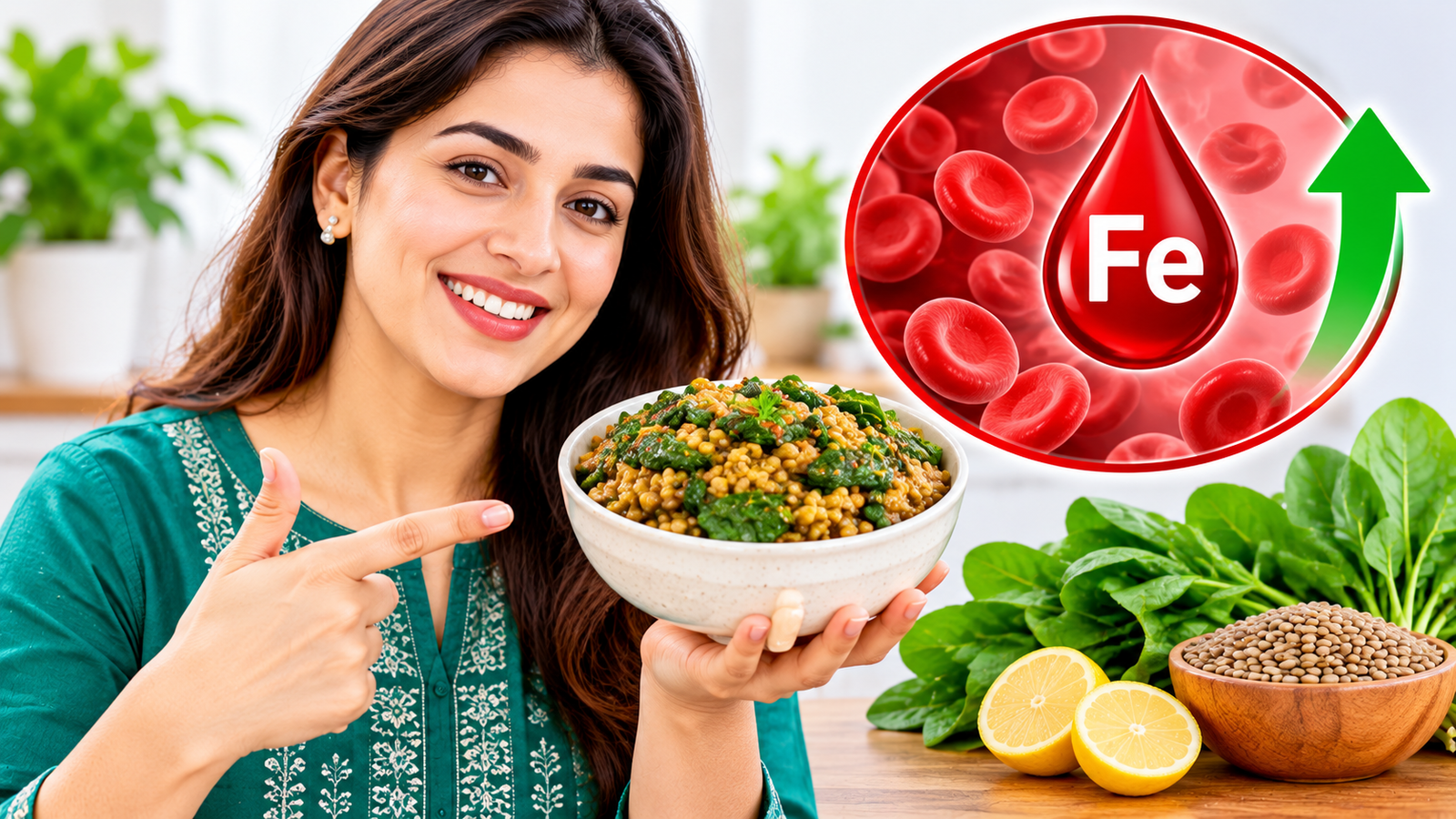
Iron deficiency in women is one of the most common reasons behind constant tiredness, pale skin and hair fall. Many women think they are simply busy or stressed, so the problem goes unnoticed for months. The good news is that low iron is easy to find with a blood test, and it can be fixed.
In this guide, you will learn 10 warning signs of iron deficiency in women, why it happens, which foods help, and when you should see a doctor.
- Iron deficiency in women is common, but it is treatable.
- Heavy periods, pregnancy and a diet low in iron are the main causes.
- Iron-rich food with vitamin C helps your body absorb more iron.
- Do not take iron tablets without a blood test and your doctor’s advice.
What Is Iron Deficiency and Why Does It Matter?
Your body needs iron to make haemoglobin, the part of red blood cells that carries oxygen around your body. When iron runs low, your body makes fewer healthy red blood cells. This can lead to iron deficiency anaemia.
Without enough oxygen, your muscles, heart and brain cannot work at their best. In short, iron deficiency in women can start quietly and slowly grow worse over months.
Why Is Iron Deficiency in Women So Common?
Women lose iron every month through periods, and their needs rise during pregnancy and breastfeeding. This is why women are at higher risk than men. The main causes of iron deficiency in women are:
- Heavy or long periods
- Pregnancy and breastfeeding, when the body needs much more iron
- A diet low in iron, such as little meat, or mostly white rice and bread
- Poor absorption, for example with some stomach or bowel conditions
- Drinking tea or coffee with meals, which can reduce how much iron your body absorbs
- Teenage growth spurts, especially in girls who have started their periods
- Long-term use of some acid-reducing medicines
10 Warning Signs of Iron Deficiency in Women
Signs of iron deficiency in women build up slowly, so people often get used to feeling unwell. Many of these signs can also come from other health problems, so a blood test is the only way to be sure.
1. Constant Tiredness and Weakness
This is the most common sign. You feel tired even after a full night of sleep, and simple tasks feel heavy.
If poor sleep is also a problem, read our guide on how to fix insomnia naturally. But tiredness that does not go away needs a blood test.
2. Pale Skin
Your skin, lips and the inside of your lower eyelids may look paler than usual. Pale inner eyelids are a useful clue, but skin colour alone is not reliable, especially on darker skin tones.
3. Shortness of Breath
You may get out of breath while climbing stairs or walking at a normal pace, because your body is short of oxygen.
4. Dizziness and Headaches
Low oxygen to the brain can cause headaches, dizziness or a feeling that you may faint, especially when you stand up quickly.
5. Fast or Pounding Heartbeat
Your heart works harder to pump the oxygen your body needs, so you may feel it racing or skipping a beat. If it is severe or comes with chest pain, see a doctor quickly.
6. Hair Fall and Brittle Nails
Hair fall is one of the most noticed signs of iron deficiency in women. Hair may look thin and dull, and nails may become weak, pale or spoon-shaped.
7. Cold Hands and Feet
Poor circulation and less oxygen can leave your hands and feet cold, even in warm weather.
8. Sore Tongue and Cracks at the Mouth
Your tongue may look smooth, swollen or sore, and you may get cracks at the corners of your mouth.
9. Restless Legs and Strange Cravings
Some women feel an urge to move their legs at night, or crave ice, clay or raw rice. A craving for non-food items is called pica, and it is linked with low iron.
10. Poor Focus and Low Mood
Your brain needs oxygen to concentrate. Low iron can cause brain fog, irritability and low mood.
Regular walking can help your energy, as you can read in our guide on the benefits of daily walking. But it does not replace treatment.
How Is Iron Deficiency in Women Diagnosed?
A doctor can check your iron levels with simple blood tests. A complete blood count (CBC) shows your haemoglobin, and a ferritin test shows how much iron is stored in your body.
Finding the cause is just as important as raising iron. Your doctor may ask about your periods, diet and any stomach problems. Please do not guess or treat yourself with tablets before a test.
Iron-Rich Foods to Help Fix Iron Deficiency in Women
Food is the first step for prevention, and it supports treatment too. There are two types of iron. Haem iron, from meat, chicken and fish, is absorbed easily. Non-haem iron, from plants and eggs, is absorbed less well, but you can improve it with the tips below.
| Food | Type of iron | Easy tip |
|---|---|---|
| Red meat, chicken, fish | Haem | A small, well-cooked portion is enough |
| Eggs | Non-haem | Omelette with spinach and tomato |
| Daal, chana, rajma | Non-haem | Add lemon juice or tomato |
| Spinach (palak) and leafy greens | Non-haem | Cook with tomato and onion |
| Dates (khajoor), dried apricots | Non-haem | A few pieces as a snack |
| Pumpkin and sesame seeds | Non-haem | Sprinkle on salads |
| Whole wheat roti, fortified cereals | Non-haem | Choose whole grain over white flour |
If you eat liver (kaleji), have it in small amounts. Pregnant women should avoid liver, because it contains very high levels of vitamin A.
How to Absorb More Iron From Your Food
What you eat with your iron-rich foods matters. These simple habits can help your body get more iron:
- Add vitamin C: squeeze lemon on daal, eat an orange, kinnow or guava with meals, or add tomato to your cooking.
- Wait before chai: keep tea and coffee at least an hour away from meals.
- Separate calcium: milk, yoghurt and calcium supplements can lower iron absorption, so avoid them with your main iron-rich meal.
- Soak and sprout: soaking grains and pulses reduces natural substances that block iron.
- Use an iron pan: cooking in a cast-iron pan adds a little iron to food.
Do You Need Iron Supplements?
Sometimes food is not enough, especially with heavy periods or pregnancy. Your doctor will confirm iron deficiency in women with a blood test, and then decide the type, dose and length of treatment. Do not choose the dose yourself, because too much iron can harm you.
Common side effects of iron tablets are:
- Constipation or loose stools
- Nausea or stomach pain
- Dark stools, which are common and usually harmless
Keep iron tablets out of the reach of children. An iron overdose is very dangerous for young children and needs urgent medical help.
Tea, milk and antacids can reduce how well tablets work. It often takes a few months for iron levels to return to normal, so follow your doctor’s plan and do not stop early.
How Much Iron Do Women Need?
The amount of iron you need depends on your age and life stage. These are general daily amounts used by many health bodies. Your own needs may be different, so ask your doctor.
- Girls aged 14 to 18: about 15 mg a day
- Women aged 19 to 50: about 18 mg a day
- Pregnant women: about 27 mg a day
- Women over 51: about 8 mg a day
A Simple One-Day Iron-Rich Meal Plan
This plan shows how to fight iron deficiency in women with everyday desi food. Change the portions to suit your needs.
- Breakfast: vegetable omelette with spinach, one whole wheat roti and an orange
- Mid-morning: a handful of dates and almonds
- Lunch: daal or chana curry with lemon, a salad with tomato and cucumber, and one roti
- Snack: roasted chickpeas or pumpkin seeds, with no tea for an hour after meals
- Dinner: chicken or palak with roti, and a guava or kinnow on the side
Common Mistakes to Avoid
These habits keep iron deficiency in women from improving:
- Taking iron tablets without a blood test
- Drinking chai right after meals
- Stopping tablets as soon as you feel better
- Eating only plant iron without any vitamin C
- Ignoring heavy periods, which can keep draining iron
When to See a Doctor
Iron deficiency in women should not be ignored, because it can slowly get worse.
- Very heavy periods, such as soaking a pad every hour for several hours, or periods lasting more than 7 days
- Chest pain, severe breathlessness or fainting
- Tiredness during pregnancy, or while planning a pregnancy
- Black, tarry stools or blood in the stool
- No improvement after a few weeks of diet changes
Frequently Asked Questions
What is the main cause of iron deficiency in women?
The most common cause of iron deficiency in women is blood loss from heavy periods, together with a diet that does not give enough iron. Pregnancy also raises the need for iron.
Can iron deficiency in women cause hair fall?
Yes. Low iron is a common reason for hair fall. Hair often improves once iron levels return to normal, though it can take a few months.
How long does it take to fix low iron?
With treatment, many people feel better within a few weeks, but it often takes three months or longer to refill the iron stores. Your doctor will repeat blood tests to check.
Which food is best for iron?
Red meat, chicken and fish give iron that is absorbed easily. Daal, chana, spinach and dates are good plant choices, especially with lemon or another source of vitamin C.
Can I take iron tablets every day without a test?
No. Take them only if a doctor advises, because too much iron can cause side effects and harm.
Is low iron common in pregnancy?
Yes, because your body needs much more iron to support your baby. Your doctor will usually check your blood and may advise iron tablets.
Final Thoughts
Iron deficiency in women is common, but it is easy to spot and treat when you know the signs. Eat iron-rich foods with vitamin C, keep chai away from meals, and get a blood test before you take any tablets.
If you notice several warning signs, please see a doctor soon. For more simple health guides, browse our Women’s Health section.