High cholesterol rarely causes symptoms, yet over time it can silently damage your blood vessels and raise the risk of heart attack and stroke. The good news is that for many people, cholesterol can be improved with everyday changes in food, activity and habits. This guide explains what cholesterol is, what causes it to rise, how it is tested, and 10 practical steps to lower it.
Please note: This article is general information, not personal medical advice. Never start, stop or change a cholesterol medicine without your doctor’s advice. Read our Medical Disclaimer.
What Is Cholesterol?
Cholesterol is a waxy, fat-like substance found in your blood. Your body needs some of it to build cells and make hormones, and your liver makes most of what you need. Problems start when there is too much of the harmful kind in your blood.
LDL (“Bad”) Cholesterol
Can build up on artery walls and narrow them. Lower levels are better.
HDL (“Good”) Cholesterol
Helps carry cholesterol away from the arteries back to the liver.
Triglycerides
Another blood fat. High levels can add to heart disease risk.
Total Cholesterol
The overall amount of cholesterol in your blood, from all types.
Common Causes and Risk Factors
- Diet high in saturated and trans fats, such as fatty meat, ghee, butter, fried foods, bakery items and vanaspati (partially hydrogenated oil)
- Being overweight, especially with extra fat around the waist
- Lack of physical activity
- Smoking and tobacco use
- Heavy alcohol use
- Family history, including an inherited condition called familial hypercholesterolaemia
- Other health conditions, such as diabetes, an underactive thyroid and kidney disease
- Age, because cholesterol tends to rise as we get older
Symptoms: Why a Blood Test Matters
High cholesterol usually causes no symptoms. Most people only find out through a blood test, or after a problem such as a heart attack or stroke. That is why checking your cholesterol matters, even if you feel well.
How Is It Tested?
The test is a simple blood test called a lipid profile. It measures total cholesterol, LDL, HDL and triglycerides. Some tests need you to fast beforehand and some do not, so follow the instructions from your doctor or laboratory. Adults should be checked from time to time, and earlier or more often if they have diabetes, high blood pressure, are overweight, smoke, or have a family history of heart disease or high cholesterol. Your doctor will set your target levels based on your overall risk.
10 Practical Steps to Lower High Cholesterol
- Cut down on saturated fat. Eat less fatty red meat, full-fat dairy, ghee and butter, and choose lean cuts and low-fat dairy.
- Avoid trans fats. Limit vanaspati, packaged biscuits, cakes and deep-fried street food. Check food labels for “partially hydrogenated oil”.
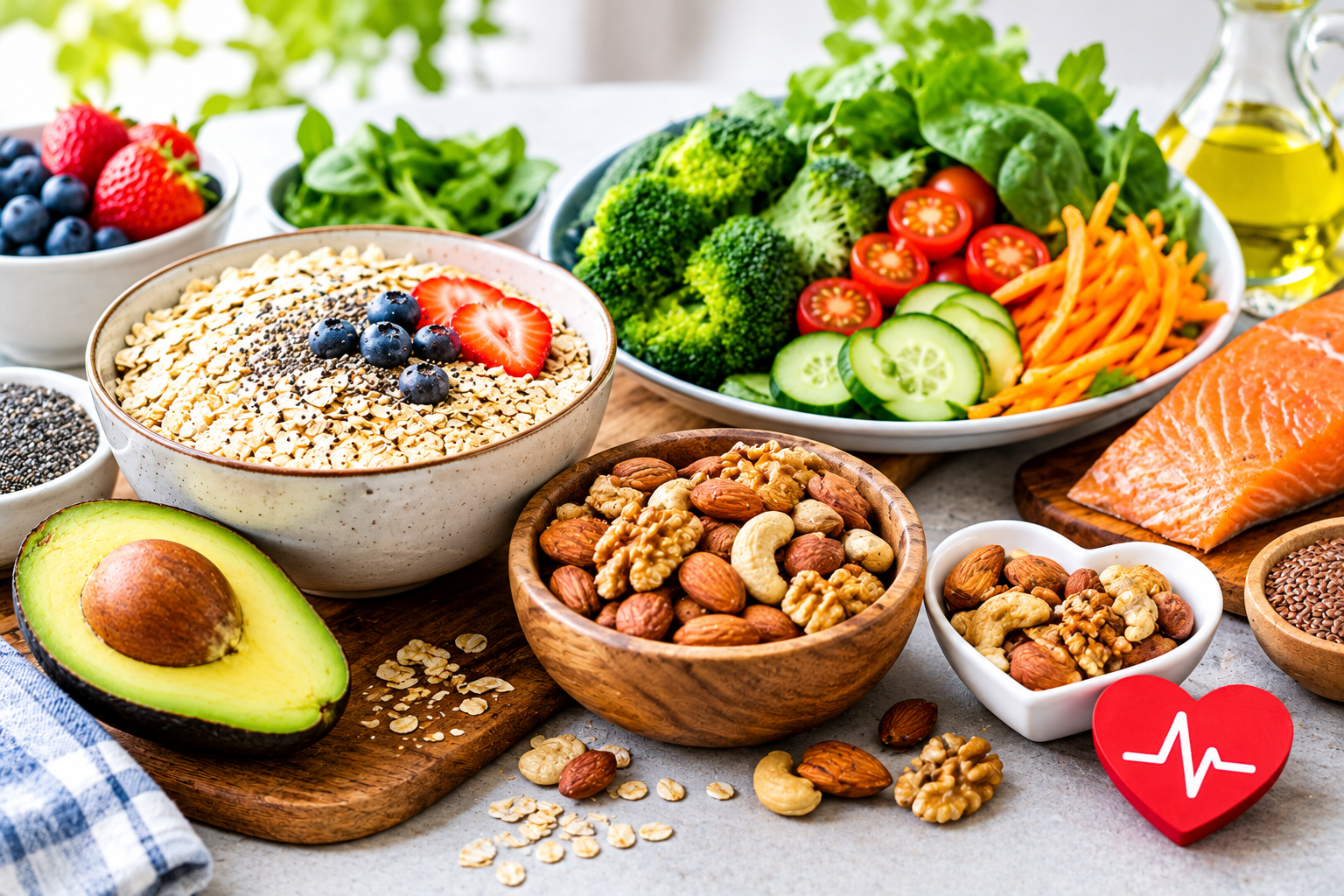
- Eat more soluble fibre. Oats, beans, lentils, chickpeas, apples and citrus fruits help reduce cholesterol absorption.
- Choose healthy fats. Replace some saturated fat with olive, canola or sunflower oil, nuts, seeds and oily fish.
- Fill half your plate with vegetables. They add fibre and volume with few calories.
- Be active most days. Aim for about 150 minutes of moderate activity a week, such as brisk walking, unless your doctor advises otherwise.
- Reach a healthy weight. Even a modest weight loss can improve cholesterol.
- Stop smoking. Quitting can raise good cholesterol and protects your heart in many other ways.
- Limit alcohol, or avoid it if you do not already drink.
- Take medicines as prescribed. If your doctor prescribes a cholesterol-lowering medicine such as a statin, take it regularly and attend your check-ups.
Foods to Choose and Foods to Limit
| Choose More | Limit or Avoid |
|---|---|
| Oats, barley, whole wheat roti | White bread, bakery items, pastries |
| Lentils, beans, chickpeas | Samosas, pakoras and other deep-fried snacks |
| Fruit and vegetables | Vanaspati and large amounts of ghee or butter |
| Nuts and seeds in small handfuls | Fatty red meat and processed meats |
| Fish, especially oily fish | Full-fat cream and sweetened drinks |
| Olive, canola or sunflower oil | Packaged biscuits and cakes with trans fats |
You can find more food ideas in our Nutrition & Dietetics section.
Do You Need Medicine?
Some people, especially those with a very high cholesterol level, a family history, diabetes or existing heart disease, need medicine as well as lifestyle changes. Your doctor will decide this after looking at your full risk. Lifestyle changes remain important even when you take medicine. If you have side effects, speak to your doctor instead of stopping the medicine yourself.
When to See a Doctor
Get emergency help immediately if you have chest pain or pressure, pain spreading to the arm or jaw, shortness of breath, sudden weakness on one side of the body, trouble speaking or a sudden severe headache. These can be signs of a heart attack or stroke.
Book an appointment with your doctor if you have not had your cholesterol checked, if you have a family history of high cholesterol or early heart disease, or if you have diabetes, high blood pressure or are overweight.
Frequently Asked Questions
Can high cholesterol be reversed without medicine?
For many people, healthy eating, regular activity and weight loss lower cholesterol considerably. Some people also need medicine, especially if their risk is high or cholesterol runs in the family. Your doctor can tell you which applies to you.
Are eggs bad for cholesterol?
For most people, the amount of saturated fat in the diet affects blood cholesterol more than the cholesterol in food. Eggs can fit into a balanced diet for many people, but ask your doctor how many are right for you if you have high cholesterol, diabetes or heart disease.
How quickly can I lower my cholesterol?
It varies. Many people see improvement within a few months of consistent changes, and your doctor will usually repeat the blood test to check progress.
Can thin people have high cholesterol?
Yes. Family history, diet, age and other conditions can raise cholesterol in people of any body size, so a blood test is the only way to know.
Conclusion
High cholesterol is common and often silent, but it is manageable. Get tested, eat more fibre and fewer saturated and trans fats, stay active, avoid tobacco, and work with your doctor on a plan that suits you. Small steps that you can keep up are more useful than strict changes that you cannot maintain.
Trusted sources for further reading
Last updated: October 2026. This article has not been medically reviewed.